Power outages in Bangladesh can bring homes, businesses, and industries to a standstill. A generator provides the backup power needed to keep life and operations running smoothly. But choosing the right generator capacity is not always easy. Buy one that is too small, and it will fail to meet your needs. Buy one that is too large, and you will end up with unnecessary costs.
This buyer’s guide will help you understand how to calculate generator capacity, what factors to consider, and how to make the best investment for your situation.
Why Generator Capacity Matters
Generator capacity, measured in kVA (kilovolt-ampere) or kW (kilowatt), determines how much load the generator can handle. Selecting the wrong capacity can lead to:
- Overloading which damages the generator and connected equipment.
- Underutilization which increases fuel consumption and operational costs.
- Frequent breakdowns due to improper load management.
The right capacity ensures efficiency, safety, and cost-effectiveness.
Step 1: Calculate Your Power Requirements
- List All Electrical Appliances or Equipment
Note down all devices you want to run during a power outage, including lights, fans, refrigerators, air conditioners, computers, medical equipment, or industrial machines. - Check the Wattage of Each Item
Every appliance has a watt rating (W). Add them up to get the total running load. - Factor in Starting Power (Surge Load)
Some devices like refrigerators, pumps, and AC units need 2–3 times more power at startup. Always include this surge load in your calculation. - Convert to kVA
Use the formula:
kVA = Total Watts ÷ Power Factor (0.8 for most cases)
Example:
If your total requirement is 8,000 W,
kVA = 8,000 ÷ 0.8 = 10 kVA generator needed.
Step 2: Consider Usage Type
- Home Use: Typically requires 5 kVA to 15 kVA depending on the number of appliances.
- Small Business or Office: Usually 15 kVA to 40 kVA depending on equipment and computers.
- Commercial and Industrial Use: Can range from 50 kVA to 2000+ kVA for heavy machinery, factories, and telecom towers.
Step 3: Think About Fuel Type
- Diesel Generators: Best for factories, large offices, and continuous heavy loads.
- Gas Generators: Suitable for eco-friendly use in hospitals, institutions, and areas with pipeline gas.
- Portable Generators: Handy for small shops, retail outlets, or temporary events.
Step 4: Plan for Future Growth
If your business is growing, your power demand will increase. Always choose a generator with 10–20 percent extra capacity to allow for expansion.
Step 5: Check Noise and Space Requirements
- Silent Generators: Perfect for residential areas, offices, and hospitals.
- Open-Type Generators: Ideal for construction sites or outdoor projects where noise is less of a concern.
Choosing the right generator capacity is crucial for safe and efficient power backup. The generator capacity determines how much load your system can handle, preventing overloading that can damage equipment. A correctly sized generator capacity avoids underutilization, which can waste fuel and increase operational costs. By understanding your needs and selecting the proper generator capacity, you ensure reliable performance, protect your devices, and save money in the long run.
Expert Tips for Buyers
- Consult a professional to perform a load assessment before purchase.
- Compare fuel efficiency across models to reduce long-term costs.
- Look for generators with digital control panels and ATS (Automatic Transfer Switch) for convenience.
- Consider after-sales service and spare parts availability in Bangladesh.
Final Thoughts
Choosing the right generator capacity is about more than just buying a machine. It is about ensuring uninterrupted power, safe operations, and long-term savings.
- For homes and small shops, compact models in the 5–15 kVA range are usually sufficient.
- For offices and commercial setups, 20–50 kVA generators ensure smooth operations.
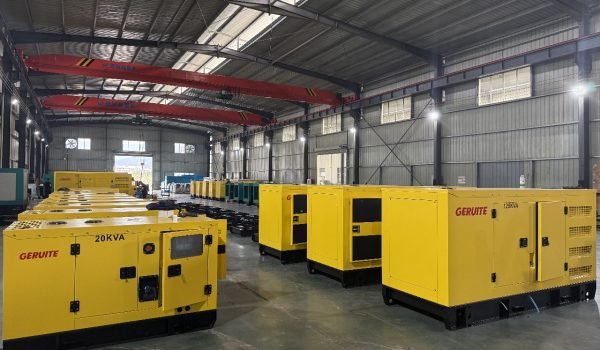
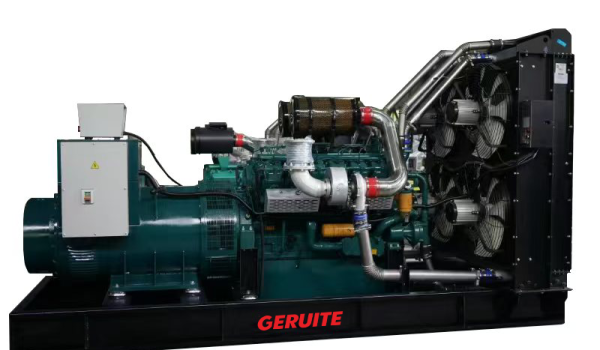
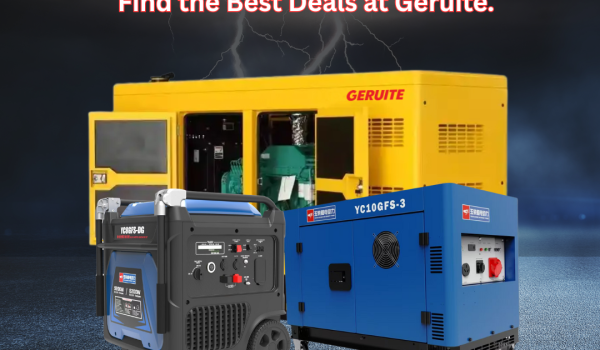
- For factories and heavy industries, Geruite and other industrial-grade brands offer high-capacity solutions from 200 kVA to 2000+ kVA.
With the right capacity, you can protect your equipment, reduce costs, and keep your operations running without disruption.